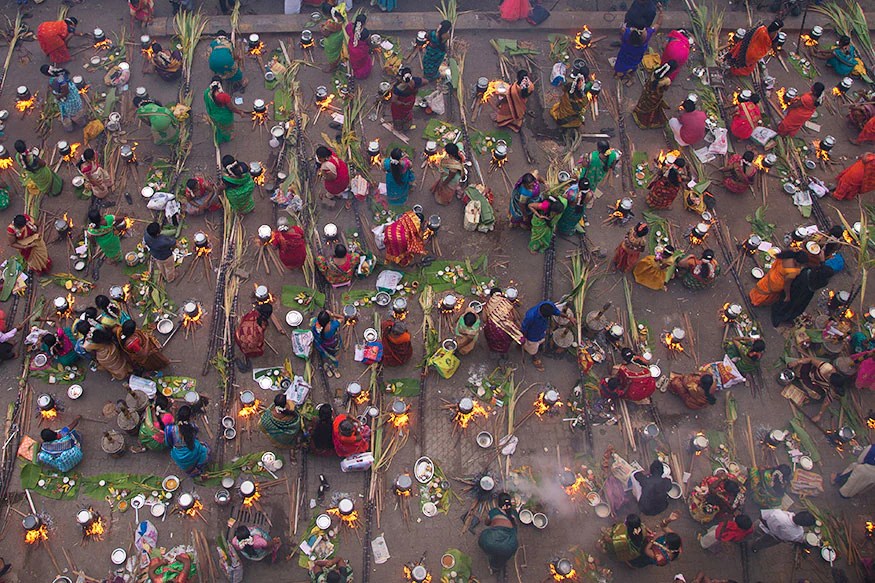
Thai Pongal is a four-day Tamil Hindu harvest festival. It honors the sun and expresses gratitude for abundance. The festival also celebrates the relationship between people, land, and community. The festival is observed each year in mid-January. It marks the beginning of the Tamil month of Thai. This period is linked to hope, renewal, and growth.
Historical Background
Thai Pongal traces its origins to ancient agrarian traditions in South India. For over a millennium, Tamil communities have marked this agricultural moment. They thank Surya, the Sun God, during this time. His warmth supports the cultivation of rice and other essential crops. Early Tamil literature includes references to sun worship, harvest rituals, and community feasts. These references are found in the Purananuru and Paripadal. They resemble modern-day Pongal.
The festival also reflects the ancient Tamil philosophy of uyir, bhoomi, and andam—life, earth, and cosmos—in harmonious relationship. By honoring the land and giving thanks, communities acknowledged the interconnectedness that sustained daily life.
Festival Overview: Four Days of Meaning and Ritual
Day 1: Bhogi Pongal (January 14)
The festival begins with Bhogi. This day is dedicated to clearing out the old to make space for renewal. Many households clean their homes, discard worn items, and start the season with a sense of clarity. Symbolically, this day signifies personal reflection, releasing burdens, and welcoming a new chapter.
Day 2: Thai Pongal (January 15)
The main day, Thai Pongal, revolves around preparing Pongal. This is a sweet dish made from freshly harvested rice, milk, and jaggery. The moment the pot boils over is celebrated as a sign of prosperity. Families offer Pongal to the Sun God before sharing it with others.
This ritual highlights gratitude, community care, and the belief that abundance grows when shared.
Day 3: Mattu Pongal (January 16)
Mattu Pongal honors cows and bulls, animals central to traditional agriculture. They are bathed, decorated, and thanked for their role in farming. This day emphasizes respect for nature, interdependence, and compassion—key themes in Tamil cultural identity.
Day 4: Kaanum Pongal (January 17)
The festival closes with Kaanum Pongal. It’s a day for visiting relatives. It is also a time for strengthening relationships and offering blessings. Families gather outdoors for meals, music, and cultural celebrations. It is a time of reconnection and social wellbeing.
Cultural and Emotional Significance
Thai Pongal celebrates hope, resilience, and gratitude—values that continue to resonate across the Tamil diaspora. For many, the festival is a reminder of their heritage. It reinforces community bonds. The simple practices nurture emotional balance and a sense of belonging.
Its focus on renewal, appreciation, and shared abundance aligns with contemporary understandings of well-being. Acts of gratitude, connection, and reflection build emotional resilience. They support mental health and foster a sense of meaning.


 Mindful Resilience
You must be logged in to post a comment.